
A factory audit checks a supplier’s legal status, production capacity, quality management system, equipment, and past export performance against a defined checklist, on site. For construction materials, it confirms a factory can actually produce your specification at volume, before you commit a large order.
This guide explains exactly what a factory audit covers, how it differs from a product inspection, and when the cost is worth it, so you know whether your next supplier needs one before you order.
What a Factory Audit Actually Is
A factory audit assesses the supplier, not the product. Where an inspection checks goods, an audit checks the company: whether it is legally registered, has real production capacity, runs a functioning quality system, and can deliver your order reliably.
Think of it as verifying the source before you trust the output. A factory that passes an audit is far more likely to produce consistent quality, because the systems behind the product are sound, not just one good sample.
What a Factory Audit Covers
A structured audit works through several areas, each confirming a different part of the supplier’s ability to deliver.
| Audit Area | What It Confirms |
|---|---|
| Legal and business status | Valid license, registered scope, and good standing. |
| Production capacity | Equipment, lines, and output can meet your quantity and lead time. |
| Quality management system | Documented processes, quality control, and defect handling. |
| Equipment and facilities | Machinery matches the products and standards claimed. |
| Certifications | Standards and test reports are valid and current. |
| Export experience | Track record shipping to markets like yours. |
Legal and Production Capacity Checks
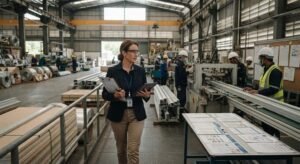
The audit first confirms the factory is real and can make your order at volume. It verifies the business license and registered scope on site, then assesses whether the equipment and lines can actually produce your quantity within your timeline.
Claimed capacity and real capacity often differ. An audit walks the floor to confirm the machinery, workforce, and output are genuine, not numbers on a specification sheet.
This builds on the documentary side of verifying a manufacturer, taking it from paperwork to physical confirmation.
Quality Management System Assessment
The audit checks whether the factory has a functioning quality system, not just a certificate on the wall. It looks at how the factory controls incoming materials, monitors production, handles defects, and documents quality, because consistent output depends on these processes.
In practice the auditor traces three control points: incoming quality control (IQC) on raw materials, in-process quality control (IPQC) during production, and final quality control (FQC) on finished goods. A factory running all three, with calibration records and a defect-tracking system, produces reliable batches.
One that relies on end-of-line sorting alone produces the tolerance drift that shows up on your site. Where a factory claims ISO 9001, the auditor confirms the certificate is genuine and current, since a certificate on paper is not proof the system is practiced.
Factory Audit, Inspection, and Verification: Three Different Things
Verification, audit, and inspection are three separate checks that work together. Buyers often confuse them, but each answers a different question at a different stage.
| Check | What It Answers |
|---|---|
| Supplier verification | Does the company legally exist and is it a manufacturer? A desk check. |
| Factory audit | Can this factory produce my order to spec, at volume, consistently? |
| Pre-shipment inspection | Did this specific order meet spec before it ships? |
Serious buyers do all three: verify the supplier first, audit before the first big order, then run a pre-shipment inspection on every shipment. A clean first order is not proof a factory can hold quality across a full container.
What a Factory Audit Costs and When It Is Worth It
A standard factory audit in China costs roughly $150 to $400 per man-day, with accredited firms charging more for deeper scopes. The common rule of thumb: an on-site audit pays for itself once your order reaches about $10,000, where a few hundred dollars of audit is a small insurance premium against a five-figure order arriving unsellable.
Below that threshold, document verification and a live video walkthrough may be enough. Above it, or for technical and safety-critical materials, the on-site audit is the check that prevents committing serious money to a supplier that cannot deliver. Re-audit strategic suppliers every 12 to 24 months, or sooner if quality drifts or the factory changes ownership.
Why It Matters More for Construction Materials
Construction materials are high-volume, high-value, and unforgiving of defects. A failed batch of tiles, steel, or glass is expensive to fix from another country and can stall a whole project. The audit reduces that risk by confirming the factory can deliver before the order is placed.
A practical tip when you or your auditor visit: insist on seeing the production floor before the meeting room. A common tactic is to keep buyers in a polished showroom, away from a thin or idle line. On the floor, count the workers actually working against the headcount claimed, and watch one unit move through a real production step.
An audit is most worth it when
- Your order is around $10,000 or more.
- You are starting an ongoing supply relationship.
- The specification is technical or safety-critical.
- You cannot visit the factory yourself.
| How JEES Global Audits Factories
An audit is only as good as the access behind it. JEES Global has logged 1,200+ factory visits across China’s hubs, assessing legal status, capacity, quality systems, and export history before any factory is recommended. Combined with independent quality inspection, it covers both the supplier and the shipment under one contact. Send the supplier details to have a factory assessed before you commit. |
Frequently Asked Questions
What is the difference between a factory audit and an inspection?
A factory audit assesses the supplier’s capacity and quality systems, while an inspection checks the actual goods before shipment. Audits answer whether a factory can deliver; inspections confirm whether it did on a given order. For the quality-system standards an audit often references, the ISO 9001 framework is the recognized benchmark.
Do I need a factory audit for every order?
No. An audit is most valuable before a large order, an ongoing relationship, or with a factory you cannot visit. For small one-off orders, document verification and a pre-shipment inspection may be enough.
How long does a factory audit take and what does it cost?
A standard on-site audit takes about a day at the factory, plus time to schedule and compile the report, and costs roughly $150 to $400 per man-day, more for accredited firms with deeper scopes. Duration and cost rise with factory size and checklist depth.
Can a factory audit be done remotely?
Parts can, through document review and live video, but a full audit relies on an on-site visit to confirm capacity and quality systems physically. Remote checks are a useful supplement, not a full replacement, for high-value orders.
Does passing an audit guarantee good products?
No. An audit confirms a factory can deliver, but each shipment should still be inspected, because even a capable factory can have an off batch. Audit the supplier once, inspect the goods every time.
Audit the Supplier Before You Commit
A factory audit is the check that stops a large order going to a supplier that cannot deliver. If you are placing a significant order or starting an ongoing relationship, send the supplier details to JEES Global and get the factory assessed for capacity, quality systems, and export history first.