
MOQ on building materials from China is set per SKU, not per order — per colour, per size and per specification variant. A factory quoting a 500 m² minimum usually means 500 m² of one tile in one colour in one size, so an order of five colours is five separate minimums, not one.
This is the detail that turns a comfortable-looking order into an uncomfortable one at purchase order stage. Buyers plan against the headline minimum, then discover the variant split multiplies it.
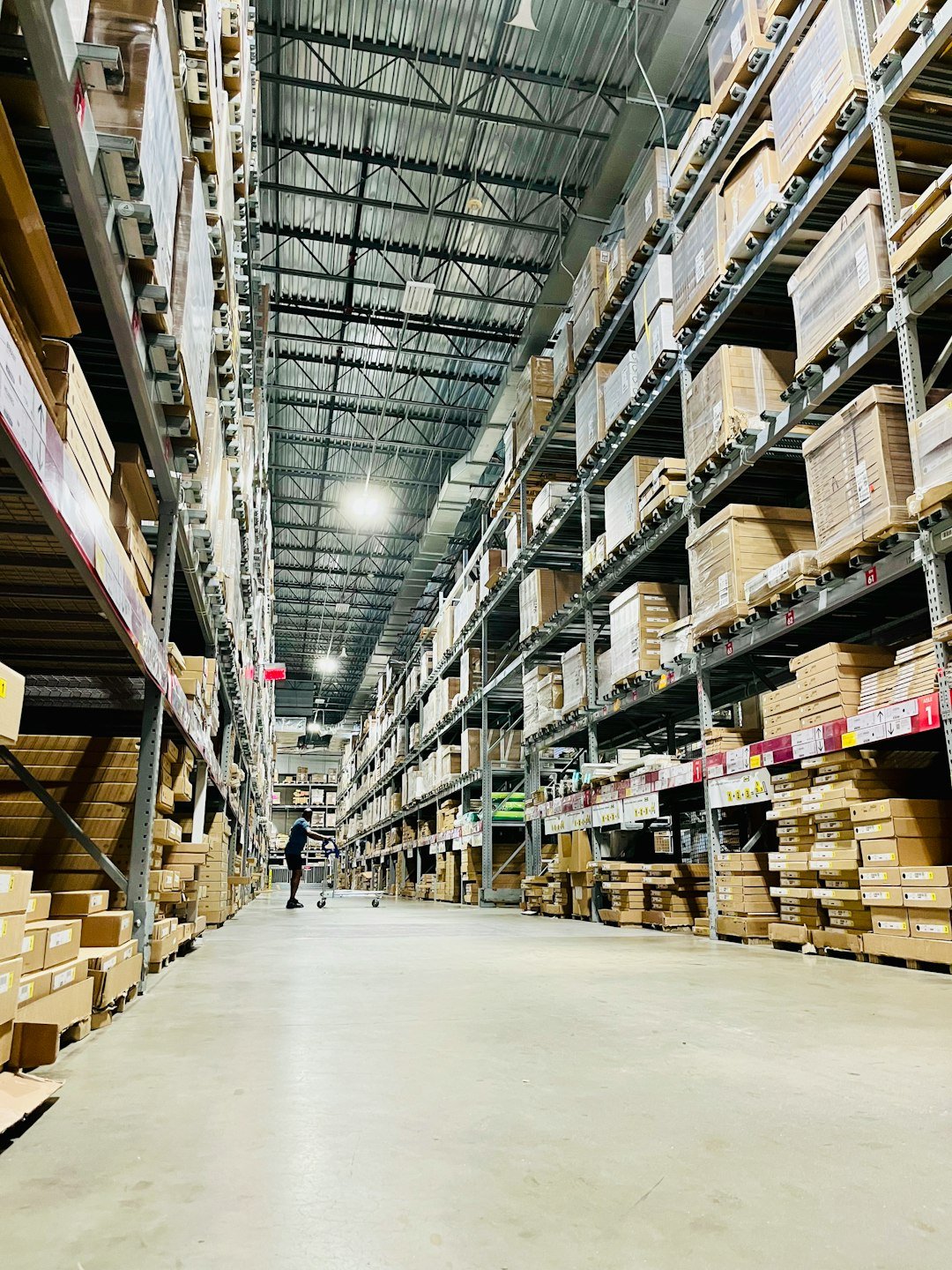
Why MOQ exists
MOQ is not a negotiating position. It is production economics.
Running a production line for a specific product requires setup: changing moulds, mixing a colour batch, calibrating machinery, purchasing raw material in supplier-minimum lots. That setup cost is fixed regardless of whether the run is 200 units or 20,000. Below a certain quantity, the setup cost per unit makes the order unprofitable, and the factory declines it or prices it at a level that surprises you.
Three separate minimums are usually in play at once:
| Minimum | Set by | Typical driver |
|---|---|---|
| Production MOQ | The factory | Setup, mould change, colour batch, raw material lot size |
| Raw material MOQ | The factory’s own supplier | Minimum purchase of a specific alloy, glaze, board or fabric |
| Shipping minimum | Logistics economics | The point at which LCL becomes more expensive per unit than FCL |
A factory may waive the first. It cannot waive the second. The third is not theirs to waive at all.
MOQ applies per variant — the rule buyers miss
| What you plan | What the factory sees |
|---|---|
| 2,000 m² of porcelain tile | 800 m² beige + 700 m² grey + 500 m² white = three MOQs |
| 60 doors | 30 single-leaf + 20 double-leaf + 10 fire-rated = three MOQs |
| 400 light fittings | 4 models × 100 = four MOQs |
| 120 window units | 3 sizes × 2 colours = six MOQs |
Colour is the most expensive variant to split. A colour batch has to be mixed, run and cleaned down; splitting one order across four colours is close to four separate production runs.
Practical consequence: consolidating variants is usually a far bigger cost lever than negotiating unit price. Reducing five tile colours to three often does more for the order economics than a discount negotiation ever will.
Related: What you are actually paying for: China building material price breakdown
MOQ and container volume
For heavy or bulky materials the practical minimum is often set by the container rather than the factory. A 20ft container has a finite payload, and for dense products such as tiles or stone you reach the weight limit before the volume limit. For light and bulky products such as insulation or cabinetry you reach the volume limit first.
This means a factory’s stated MOQ and the sensible order quantity are frequently different numbers, and the container is what reconciles them. Loading quantities vary significantly with thickness, packing method and pallet configuration, so ask the factory for the loading quantity of your exact specification rather than working from a category average.
The general principle holds regardless of category: a part-filled container carries close to the same freight cost as a full one, so under-ordering is expensive in a way that does not appear on the factory quotation.
Related: FCL vs LCL for construction material shipments: which to choose
Six ways to meet MOQ without overbuying
1. Consolidate variants. Fewer colours, fewer sizes, fewer specification splits. The single most effective lever.
2. Use standard sizes and stock colours. Factories keep certain sizes and finishes in regular production. Ordering from that range often bypasses the custom MOQ entirely.
3. Combine categories into one container. The MOQ per factory is separate, but the shipping minimum is shared. Doors from one supplier plus tiles from another plus sanitary ware from a third can fill one container that none of them could fill alone.
4. Buy across project phases. If you have a repeat programme, order the aggregate quantity and schedule releases — subject to the factory agreeing to hold stock and to your storage cost.
5. Ask about stock or overrun batches. Genuinely available and genuinely cheap. The trade-off is limited colour and batch consistency, which rules it out for anything requiring visual uniformity across a large area.
6. Use LCL where the numbers support it. Less-than-container-load is available but the per-unit cost is higher and destination handling is more complex. It suits samples, small trial orders and genuinely small categories — not project volumes.
Related: One-stop vs multi-supplier sourcing: why consolidation protects your margin
When a low MOQ should make you cautious
An unusually low minimum on a custom product is worth understanding before you celebrate it. Common explanations:
- The supplier is a trading company sourcing from stock, not producing — fine, but the margin and the batch consistency both change
- The product is standard stock, not the custom item you specified
- The quantity is below MOQ and priced accordingly, with the setup cost buried in the unit price
- It is a first-order incentive and the second order will be priced differently
- The factory intends to subcontract to a workshop it does not control
Ask directly: is this from production or from stock, and does the price hold at this quantity on a repeat order?
Related: Supplier verification checklist: 12 things to confirm before you pay · Alibaba vs a China sourcing company
Getting MOQ information you can actually plan against
When you request MOQ, request it in this form:
- MOQ per SKU, stated explicitly as per colour and per size
- Whether MOQ applies to the total order or to each variant
- Price at MOQ, and at two higher volume tiers
- Whether below-MOQ orders are accepted, and at what surcharge
- Whether the product is standard production or requires tooling
- Container loading quantity for the product, per 20ft and 40ft
Point 6 is the one buyers forget to ask and the one that determines whether the order makes commercial sense.
MOQ on a multi-category project order
A project BOQ hits this problem hardest. Twelve categories, each with its own factory, each with its own MOQ, several with variant splits. Managed independently, the buyer either overbuys to clear each minimum or drops categories from the scope.
The alternative is to treat MOQ as a portfolio problem rather than a per-supplier problem: consolidate variants where the design permits, place the categories that genuinely need volume with factories that can hold stock, and fill the container across suppliers rather than within one.
That is what a sourcing coordinator does on a project order — and it is why the practical minimum for a mixed-category BOQ through jeesglobal.com is set by container economics rather than by any single factory’s rule. The BOQ sourcing process confirms MOQ per line at quotation stage across all 19 categories, so you see the variant multiplication before you commit to a design split — not after.
For reference, MOQ behaviour differs sharply by category: tiles and flooring are colour-batch driven, doors and windows are size and profile driven, and sanitary ware is mould driven.
Frequently asked questions
Is there a minimum order to work with a sourcing company?
It depends on the company. JEES Global does not impose its own minimum order quantity — MOQ is set by the individual manufacturers and varies by product category. Where a single category is below a factory’s minimum, the usual route is to combine it with other categories in one consolidated shipment.
Can MOQ be negotiated?
Sometimes, on standard products where the factory has an existing production run. Rarely on custom products, where the minimum reflects a real setup cost rather than a policy.
What happens if I order below MOQ?
Either the factory declines, or accepts with a surcharge that recovers the setup cost. Ask for the surcharge in writing rather than assuming the unit price holds.
Does MOQ apply to samples?
No. Samples are handled separately, usually with their own cost and lead time, and often credited against a subsequent production order.
Is LCL a good way to avoid MOQ?
LCL solves the shipping minimum, not the production minimum. It suits trial orders and genuinely small categories, but per-unit cost and destination handling are both higher than FCL.
Ask about MOQ for your category
Send your material list with quantities and variant splits. You will get MOQ confirmed per line, per colour and per size, alongside the container loading quantity — before you finalise the design split.