
The Incoterm on your quotation decides where the seller’s responsibility ends, where yours begins, and what the price actually includes. For construction materials shipped from China, FOB and CIF cover most orders, DDP suits buyers with no import capability, and EXW suits buyers with a strong forwarder already in China.
Choosing the wrong one is rarely catastrophic, but comparing quotations across different ones is. An EXW price and a CIF price for the same goods are not the same number and never will be.
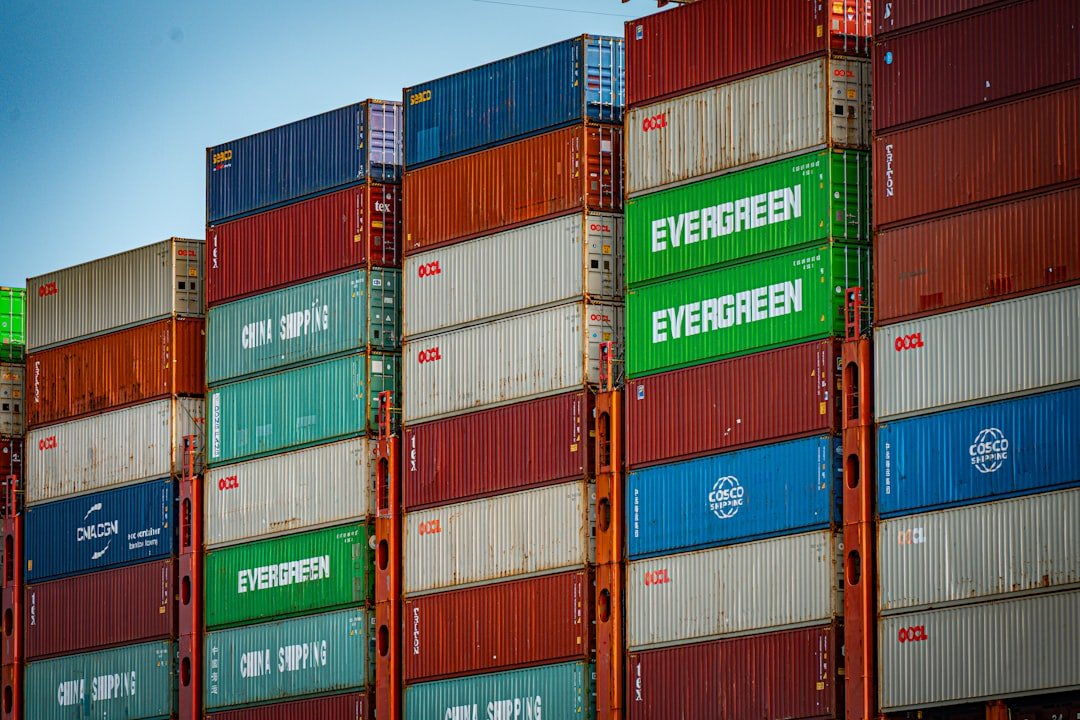
What an Incoterm actually governs
Incoterms are standard trade terms published by the International Chamber of Commerce. Each one allocates three things between buyer and seller:
- Cost — who pays for each leg of the journey
- Risk — at which precise point responsibility for loss or damage transfers
- Obligations — who arranges carriage, insurance, export clearance and import clearance
Cost and risk do not always transfer at the same point, which is the detail that catches people out. Under CIF, for example, the seller pays freight to the destination port but risk passes much earlier.
What an Incoterm does not govern: when payment is due, what happens on defective goods, or who owns the cargo. Those belong in your contract and your payment terms, not in the three-letter code.
The terms that matter for building materials
| Term | Seller pays to | Risk passes | Who clears export / import |
|---|---|---|---|
| EXW Ex Works | Nothing beyond making goods available at the factory | At the factory, before loading | Buyer / Buyer |
| FCA Free Carrier | Delivery to the named carrier or place | On delivery to the carrier | Seller / Buyer |
| FOB Free On Board | Goods loaded on the vessel at the Chinese port | When goods are on board | Seller / Buyer |
| CFR Cost and Freight | Destination port — freight included | When goods are on board at origin | Seller / Buyer |
| CIF Cost, Insurance and Freight | Destination port, plus insurance | When goods are on board at origin | Seller / Buyer |
| DAP Delivered at Place | Named destination, ready for unloading | At the named destination | Seller / Buyer |
| DDP Delivered Duty Paid | Named destination, duty and import clearance included | At the named destination | Seller / Seller |
Note the split under CFR and CIF: the seller pays freight all the way to your port, but the risk of loss sits with you from the moment the goods are loaded in China. If the vessel has a problem mid-ocean, that is your cargo, not theirs — which is exactly why CIF includes an insurance obligation and CFR does not.
FOB: the working default
FOB is the most common term for construction material shipments from China and the most useful default for an importer with any shipping capability.
Why it works: the supplier handles everything inside China — inland transport, export clearance, terminal handling, loading. You control the ocean freight, which means you choose the carrier, the routing and the service level, and you see the real freight cost rather than a marked-up one.
What to watch: always name the port. “FOB China” is meaningless; “FOB Ningbo” is a term. And confirm which local charges at origin are included, because some suppliers quote FOB and then present origin charges separately.
CIF: one number to your port
Why buyers choose it: simplicity. One price covers the goods delivered to your port, insurance included. Useful for first-time importers or where you have no forwarder relationship.
What to watch: the freight is arranged by the seller, so you have no visibility of what it actually cost and no control over routing. Sellers sometimes select cheap carriers with long transits or multiple transhipments. Destination charges are also still yours, and a seller who booked cheap origin-side freight may leave you with high destination handling charges — a well-known way of moving cost onto the buyer while showing an attractive CIF number.
Also check the insurance level. The minimum cover required under CIF is limited; if your cargo warrants broader cover, specify it or arrange your own.
DDP: convenient, and worth understanding first
Why buyers choose it: a single delivered price with no import work at all. Attractive for buyers with no customs capability or no broker relationship.
What to watch: under DDP the seller handles import clearance in your country, which means they control how your goods are declared and valued. In most jurisdictions the importer of record carries the legal liability for that declaration. Before accepting DDP, establish who is named as importer of record and whether your business carries any exposure for a declaration you did not make.
DDP also bundles duty and destination costs into one figure you cannot see inside. That is convenient and it is also the least transparent way to buy.
Related: How to calculate landed cost on building materials imported from China
EXW: usually the wrong choice from China
Under strict EXW the buyer is responsible for collecting from the factory and for export clearance — in a country where they may have no legal presence. In practice, Chinese suppliers usually assist with export formalities anyway, which makes the term a poor description of what actually happens.
Unless you have your own agent in China handling collection and export declaration, FCA or FOB describes the real arrangement better and leaves less room for dispute.
Normalising quotations for comparison
The practical reason to understand all of this is comparison. Ask every supplier to quote on the same term — FOB at a named Chinese port is the usual choice — and the numbers become comparable. If a supplier can only quote EXW, add inland freight, export clearance and terminal handling yourself before putting it next to an FOB quote.
Then build the landed cost from that common baseline. The Incoterm tells you where the quoted price stops; the landed cost calculation tells you what the material actually costs on site.
Related: China building material price breakdown · FCL vs LCL for construction material shipments
Which to choose
| Your situation | Sensible term |
|---|---|
| You have a forwarder and import regularly | FOB |
| First import, no forwarder relationship | CIF or CFR |
| No import capability at all, small order | DAP or DDP, with the importer-of-record question settled |
| You have an agent or office in China | FCA or EXW |
| Consolidating from several factories | FOB, with consolidation arranged before loading |
Incoterms allocate cost, risk and obligation but do not replace your contract. Confirm the current rules and your own position with your freight forwarder and, where the sums warrant it, your legal adviser.
Incoterms on a consolidated order
Where a project BOQ is sourced from several factories, quoting each supplier on a common FOB basis at one named port is what makes consolidation possible in the first place — the goods all need to reach the same place, on the same commercial basis, before a single container is stuffed.
Arranging that is part of what sourcing construction materials from China through a coordinator involves: quotations normalised to one term and one port, inland movement from each factory arranged to a single consolidation point, and one FOB or CIF figure for the consolidated container rather than separate terms per supplier. The process covers all 19 material categories, from BOQ review through to loading.
Frequently asked questions
What is the difference between FOB and CIF?
Under FOB the seller’s cost ends when goods are loaded on the vessel in China and you arrange ocean freight. Under CIF the seller arranges and pays freight and insurance to your port. Risk passes at the same point under both — when goods are loaded at origin.
Is CIF safer than FOB?
Not inherently. CIF is simpler because the seller arranges freight, but you lose visibility of the freight cost and control of the routing, and destination charges remain yours either way.
Does DDP mean I pay nothing on arrival?
In principle the seller covers duty and clearance. In practice, check what the quotation actually includes, and establish who is named as importer of record, because that determines who carries the legal responsibility for the customs declaration.
Which Incoterm should I use for a first order from China?
CIF or CFR is the usual starting point if you have no forwarder relationship. Once you have one, FOB generally gives better control and better visibility of freight cost.
Why does the Incoterm need a named place?
Because the term only means something with a location attached. “FOB Ningbo” identifies exactly where cost and risk transfer; “FOB China” does not.
Ask about your destination port
Send your material list with the destination port. Quotations come back on one common Incoterm so they can actually be compared, with consolidation and freight options set out alongside.