
You can tell a factory from a trading company by checking the business license scope, asking detailed production questions, requesting a live factory walkthrough, and comparing the address to the product range. A factory makes one category of goods and knows it deeply.
A trading company resells many categories with margin added and often struggles on technical detail. This guide shows the exact tells that separate the two, why the difference affects your price and quality, and how to confirm which one you are actually dealing with.
Why the Difference Matters
A factory controls production. A trading company resells someone else’s goods with margin built in. That changes your price, your quality assurance, and your ability to hold the supplier to a specification.
Trading companies are not inherently bad. They can be useful for small or mixed orders. The problem is a trader presenting itself as a factory, because you then negotiate and verify as if you are dealing with the maker when you are not.
Tell 1: The Business License Scope and Capital
The registered business scope on the license reveals whether a company manufactures or trades. A factory’s scope includes production or manufacturing of its product category. A trader’s scope centers on import, export, and sales, with no manufacturing rights.
This is the single clearest documentary tell. A company claiming to make goods whose license only permits trade is, by definition, not the manufacturer. Registered capital is a secondary clue: manufacturers usually register with higher capital reflecting plant and equipment, while pure traders often register with a much smaller amount. Treat it as context, not proof.
Reading the scope correctly is a skill worth having. See how to read a Chinese business license for what each field means.
Tell 2: Product Range Breadth
A factory makes a narrow, related range. A trading company sells across unrelated categories. A supplier offering tiles, steel structure, lighting, and furniture from one catalogue is almost certainly a trader, because no single factory makes all of those.
Real factories specialize. Their equipment, expertise, and certifications cluster around one category. Breadth across unrelated products is a reliable sign you are looking at a reseller consolidating many factories.
Quick read on the range
- Narrow, related products: likely a factory.
- Wide, unrelated categories: likely a trading company.
- Everything for a whole project from one seller: almost certainly a trader.
Tell 3: Depth on Technical Questions
A maker knows its product in detail. A reseller often does not. Ask about material grade, tolerance, production process, or a specific technical spec. A factory answers immediately and precisely. A trader hedges, delays, or checks with someone before replying.
This is one of the most revealing tests because it is hard to fake. Detailed process questions expose whether the person you are speaking to actually controls production or is relaying answers from a factory you cannot see.
Tell 4: The Factory Walkthrough
Ask for a live video walkthrough of the production line. A genuine factory can show its machinery and current production on request. A trading company will offer excuses, pre-recorded footage, or photos that never quite match the products you are buying.
Insist on live, not recorded. Ask to see specific equipment making your product. A real factory has no reason to refuse, and the refusal itself is often the answer.
A live walkthrough is a lighter version of a full factory audit, which verifies capacity and quality systems against a defined checklist for higher-value orders.
Tell 5: The Bank Account and Export Rights
The payment account should match the registered company name exactly. A genuine factory invoices and receives payment under its legal name. A request to pay a personal account, a Hong Kong trading company, or any name that does not match the license is a strong sign you are dealing with a middleman or a fraud.
Legitimate exporters also hold their own export rights and, in many cases, VAT general-taxpayer status, which lets them issue proper tax invoices. A supplier borrowing another company’s export license is a signal the business is smaller or less established than it claims.
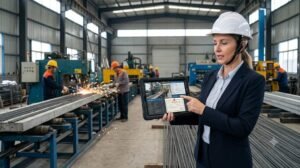
Factory vs Trading Company: Side by Side
The signals cluster consistently. Here is how the two typically differ across the tells above.
| Signal | Factory / Trading Company |
|---|---|
| License scope | Factory: manufacturing. Trader: trade and sales only. |
| Product range | Factory: narrow and related. Trader: wide and unrelated. |
| Technical depth | Factory: precise and immediate. Trader: vague or relayed. |
| Live walkthrough | Factory: shows production. Trader: avoids or fakes it. |
| Bank account | Factory: matches legal name. Trader: mismatched or personal. |
| Pricing | Factory: direct cost. Trader: cost plus hidden margin. |
When a Trading Company Is Actually Fine
A trading company is a reasonable choice when you value convenience over the lowest price. For small, mixed orders across several categories, a good trader can be easier than managing multiple factories yourself. The key is knowing that is what you are choosing.
The problem is never that a company is a trader. It is a trader pretending to be a factory, because that hides the margin and weakens your quality control. Transparency is what matters.
If you are weighing the trade-offs across all your options, the sourcing agent versus trading company versus buying direct comparison lays out the full picture.
How to Confirm It Before You Order
Put the tells together into a quick confirmation routine before committing to any supplier.
- Read the license scope for manufacturing rights and check registered capital.
- Check whether the product range is specialized or broad.
- Test technical depth with specific process questions.
- Insist on a live factory walkthrough.
- Confirm the payment account matches the registered legal name.
These tells are the fast version of the full manufacturer verification process, which adds official registry and address checks for higher-value orders.
| How JEES Global Confirms Who You Are Buying From
JEES Global runs this exact check as part of verifying every manufacturer, confirming factory status before a supplier is ever recommended, so you always know whether you are dealing with the maker or a middleman. With independent quality inspection on top, both the supplier and the goods are covered. Send the supplier details and get the company confirmed as a genuine factory, or flagged, before you order. |
Frequently Asked Questions
Is it better to buy from a factory or a trading company?
A factory usually offers a lower price and stronger quality control, while a trading company offers convenience for small, mixed orders. The right choice depends on your order size and how much you value price transparency. For broader guidance on vetting overseas suppliers, the US International Trade Administration publishes exporter and supplier due-diligence resources.
Can a trading company be as reliable as a factory?
A reputable trading company can be reliable, but it adds a layer between you and production, which can weaken quality control and hide margin. Reliability depends on the specific company and its transparency about being a trader.
How can I quickly tell if a supplier is a trader?
Look at the product range. A supplier offering many unrelated categories from one catalogue is almost certainly a trading company, because no single factory makes all of them. Confirm with a license check and technical questions.
Do factories always have lower prices than traders?
Usually on unit price, because there is no reseller margin, but not always on total cost once you factor in the coordination a trader handles. Compare landed cost, not just the headline price, when deciding.
Will a factory refuse a video walkthrough?
A genuine factory rarely refuses a live walkthrough of its production. Persistent avoidance, pre-recorded footage, or excuses are common signs the supplier does not control the production it claims to.
Know Exactly Who You Are Buying From
Knowing whether your supplier is a factory or a trader changes how you price, verify, and control quality. If you want certainty before you order, send the supplier details to JEES Global and get the company confirmed as a genuine manufacturer, or flagged as a middleman, before your money moves.