
To verify a construction material manufacturer in China, check the business license and registered scope, confirm the company actually manufactures rather than resells, review export history and certifications, and inspect the factory in person or by video before you pay.
Skipping any of these is where deposits get lost. This guide walks through each verification step in order, what a genuine factory should be able to show you, and the warning signs that a supplier is not what it claims, so your money goes to a real manufacturer.
Why Verification Comes Before Everything Else
Never send a deposit to a supplier you have not verified. A polished website, a fast reply, and a professional catalogue prove nothing about whether a company can produce what it promises. Verification is basic procurement discipline, not paranoia.
The most expensive mistake in China sourcing is paying a supplier who cannot deliver, either because it is a reseller with no control over production, or because it is not a real business at all. Every step below exists to prevent that.
Step 1: Check the Business License and Cross-Check It Officially
A legitimate Chinese manufacturer has a business license you can read, and a registration you can verify against the government database. The license shows the legal name, the 18-digit Unified Social Credit Code, registered capital, and, crucially, the approved business scope, which reveals whether the company is licensed to manufacture or only to trade.
Do not stop at the document the supplier sends. Cross-check it against the National Enterprise Credit Information Publicity System (NECIPS), also known as GSXT, the free official registry run by China’s market regulator. Enter the full Chinese company name or the Unified Social Credit Code and confirm the record matches. If the company cannot be found, or the details differ from what the supplier told you, stop.
What to confirm on the license
- The legal company name matches the supplier, the invoice, and the bank account.
- Registered business scope includes manufacturing your product.
- Company status is active and in good standing on NECIPS, not just on the paper copy.
- No serious administrative penalties or irregularities listed.
Reading the document correctly takes some knowledge. Learn how to read a Chinese business license before you rely on one.
Step 2: Confirm the Address Is a Real Factory
A registered company is not the same as a working factory. Confirm the address on the license is an industrial site, not a residential apartment or a virtual office. This single check catches a common fraud, the middleman using stolen factory photos.
Cross-check the registered address on Google Maps or Baidu Maps satellite view. A genuine factory occupies a large plot with warehouses, loading docks, and truck parking. A residential building or serviced office is a red flag. For extra confirmation, ask for a recent utility bill in the company name, since a real production line consumes significant power.
Step 3: Confirm It Is a Factory, Not a Reseller
A manufacturer controls production. A trading company resells someone else’s goods. The difference matters because a reseller cannot guarantee quality, lead time, or spec compliance the way the actual factory can.
Resellers are not always a problem, but you need to know which you are dealing with, because it changes how you verify quality and negotiate. A company presenting itself as a factory while quietly reselling is a warning sign in itself. One quick check: confirm the customs or export code matches the license company name, since a mismatch can mean the supplier is borrowing another company’s export rights.
The tells that separate the two are covered in detail in factory versus trading company, from license scope to how they answer technical questions.
Step 4: Review Export History, Certifications, and Records
A real exporter has a track record and the certifications your market requires. Ask how long they have exported, to which countries, and request the product certifications relevant to your destination, CE, ISO, SGS, ASTM, or local equivalents.
A factory that regularly ships to your region understands its documentation, packaging, and compliance requirements. One that has never exported to your market may stumble on paperwork that holds your container at customs. Where possible, also check the company’s litigation records and tax credit rating, both visible through Chinese business databases, since a pattern of disputes or penalties signals operational trouble.
Documents worth requesting
- Product certifications for your destination market, confirmed with the issuing body.
- Recent test reports matched to current production.
- Export references, ideally two or three buyers in your region you can contact.
Step 5: Inspect the Factory, in Person or by Video
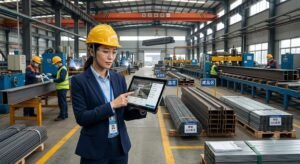
The most reliable verification is seeing the factory produce your product. A physical visit is best. When that is not possible, a live video walkthrough, not pre-recorded footage, confirms the production lines, capacity, and quality processes actually exist.
A pre-recorded video or stock photos prove nothing. Insist on a live walkthrough where you can ask to see specific machinery and current production. A genuine factory has no reason to refuse.
For a structured on-site check, a factory audit goes further than a walkthrough, verifying systems, capacity, and quality controls against a defined checklist.
Warning Signs a Supplier Is Not Genuine
Certain patterns reliably signal risk. None is proof of a scam on its own, but several together are a reason to stop and verify harder before any money moves.
| Warning Sign | Why It Matters |
|---|---|
| Refuses a live video walkthrough | A real factory can show its production on request. |
| License scope is trade only | Suggests a reseller presenting as a manufacturer. |
| Prices far below every other quote | Often signals lower spec or a spec you cannot verify. |
| Pushes for full payment upfront | Legitimate factories work on staged deposit and balance. |
| Vague on technical questions | A maker knows its own product in detail. |
These overlap heavily with Alibaba scam supplier patterns, which is why verification matters as much on a marketplace as anywhere else.
What Skipping Verification Actually Costs
The cost of verification is a fraction of the cost of a failed order. Picture a buyer who wires a 30% deposit to a “factory” found online, drawn in by a price well below every other quote. The company photos were real; the production line was not.
The address turned out to be a small office, not a factory. The goods that eventually shipped came from an unknown workshop and failed on arrival. A ten-minute NECIPS check and a live video walkthrough would have exposed the gap before any money moved. This pattern repeats constantly, and it is entirely preventable with the five steps above.
| How JEES Global Verifies Factories for You
Verification is the step buyers most often skip and most regret skipping. JEES Global checks business registration, production capacity, certifications, export history, and samples before any factory is recommended, backed by 1,200+ logged factory visits. Combined with independent quality inspection, the same presence on the ground covers verification and pre-shipment checks. Send the supplier details and we verify before your deposit moves. |
Frequently Asked Questions
How do I check if a Chinese manufacturer is legitimate?
Check the business license and registered scope, confirm it manufactures rather than resells, review export history and certifications, and inspect the factory in person or by live video. You can also cross-check company registration through official channels; the China National Enterprise Credit Information Publicity System is the government registry for verifying registered businesses.
Can I verify a factory without visiting China?
Yes. A live video walkthrough, document verification, and a third-party on-site check by a local inspector cover most of what a visit would, which is how most buyers verify without traveling.
What is the difference between a verified supplier and a real factory?
A verified supplier badge on a marketplace confirms membership and some basic checks, not that the company is the actual manufacturer of your product to your standard. Independent verification of the license, capacity, and export history is still needed.
How long does supplier verification take?
Basic document and license checks can be done in a day or two. A live video walkthrough adds a little time, and a full on-site audit takes longer to schedule but gives the strongest assurance. Build the time into your sourcing schedule.
Is a business license enough to trust a supplier?
No. A license confirms the company exists and its registered scope, but not its production quality or reliability. Combine it with export history, certifications, and a factory check for real confidence before paying.
Verify Before You Pay, Every Time
Verification is the cheapest insurance in China sourcing and the step buyers regret skipping most. If you would rather have a team confirm a manufacturer is real before your deposit moves, send the supplier details to JEES Global and get a factory verified against license, capacity, and export history first.