
A wholesale raw material supplier in China is usually one of four businesses: a mill, a distributor authorised by a mill, a stockist in a trading market, or a trading company. The right one depends on three things: how many tonnes you need, how standard your specification is, and how fast the material has to reach site. Pick the wrong type and you either pay a stockist premium on a full-mill order or wait months for a mill to roll a quantity a stockist could have loaded next week.
This guide is written for construction buyers: contractors, developers, fabricators and importers buying steel, stainless steel, aluminium, copper, cement and PVC resin from China. It covers where these materials are made, how to tell supplier types apart, how prices are built, the 2026 export rules that change the paperwork, and the checks that stop a raw material order from going wrong. It does not cover mining products such as iron ore or bauxite.
Which construction raw materials buyers source from China
Most construction buyers are not buying true raw materials. They buy semi-finished products: coil, plate, bar, sections, pipe and extrusions that a fabricator or contractor turns into the finished element. Naming the form and the standard in your enquiry is what separates a usable quotation from a guess.
| Material | Forms bought wholesale | Standards often named in the order |
|---|---|---|
| Carbon steel | Rebar, wire rod, hot-rolled and cold-rolled coil, plate, H-beams and other sections | GB/T 1499.2, ASTM A615, BS 4449 (rebar); EN 10025 (structural steel) |
| Coated steel | Galvanised coil (GI), pre-painted coil (PPGI) | EN 10346, ASTM A653 |
| Steel pipe and hollow sections | Welded and seamless pipe, square and rectangular hollow sections | EN 10219, ASTM A500, ASTM A53 |
| Stainless steel | Coil, sheet, bar and tube in grades such as 304 and 316 | ASTM A240, EN 10088 |
| Aluminium | Sheet, coil, plate and extrusions in alloys such as 6063 and 6061 | GB/T 5237 (building profiles), EN 755, ASTM B221 |
| Copper | Tube, rod and wire for plumbing, HVAC and electrical work | ASTM B88, EN 1057 |
| Cement | Bagged or bulk cement, clinker | EN 197-1, ASTM C150 |
| PVC resin | Resin and compounds for pipe and profile production | Grade by K-value on the supplier datasheet |
If your list mixes raw materials with finished products such as windows, sanitary ware or tiles, treat them as separate purchases with separate supplier types. The finished products follow the process in our guide on how to source building materials from China.
Where China’s raw material suppliers are concentrated
Scale is the reason buyers look to China first. China produced 960.8 million tonnes of crude steel in 2025, about 52% of the world total of 1,849.4 million tonnes, according to worldsteel. Production and trading cluster in a handful of regions, and knowing them tells you which suppliers have real stock and which are reselling from elsewhere.
| Region | What it is known for | Useful for |
|---|---|---|
| Hebei, especially Tangshan | China’s largest steel-producing province | Hot-rolled coil, plate, sections, wire rod |
| Tianjin | A major base for welded steel pipe | Welded pipe, square and rectangular hollow sections |
| Foshan, Guangdong | Lecong steel trading market; Nanhai district aluminium extrusion cluster | Steel from stock in South China; aluminium profiles |
| Wuxi, Jiangsu | A stainless steel trading centre whose prices and stock levels are tracked by price agencies | Stainless coil, sheet, bar and tube |
| Shandong, including Binzhou | Aluminium smelting, rolling and extrusion | Aluminium sheet, coil and extrusions |
A hub tells you where to look, not whom to trust. A trading office in any of these cities can quote material it does not hold. For finished materials, see where building materials are actually made in China.
The four types of wholesale raw material supplier
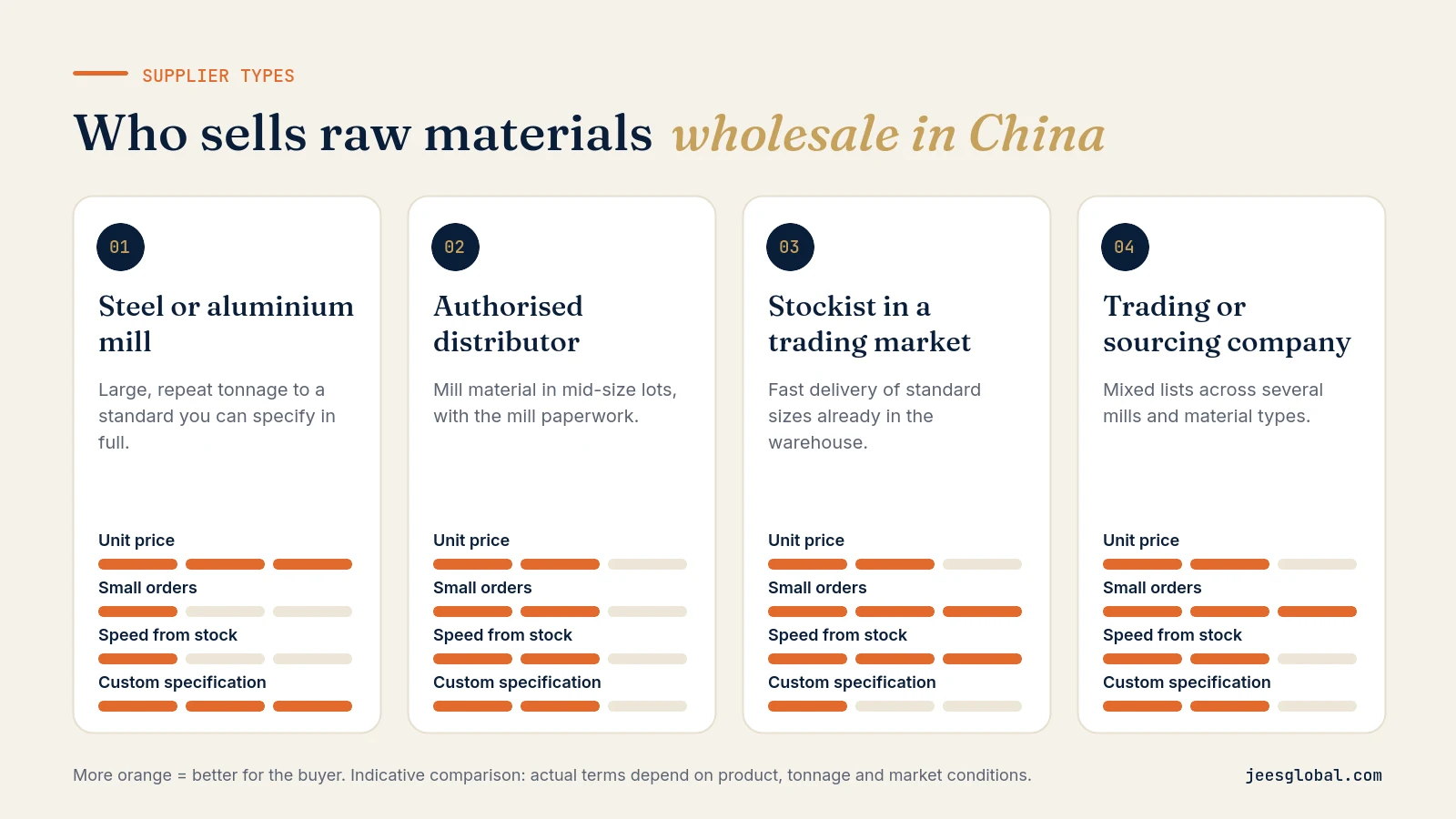
1. The mill
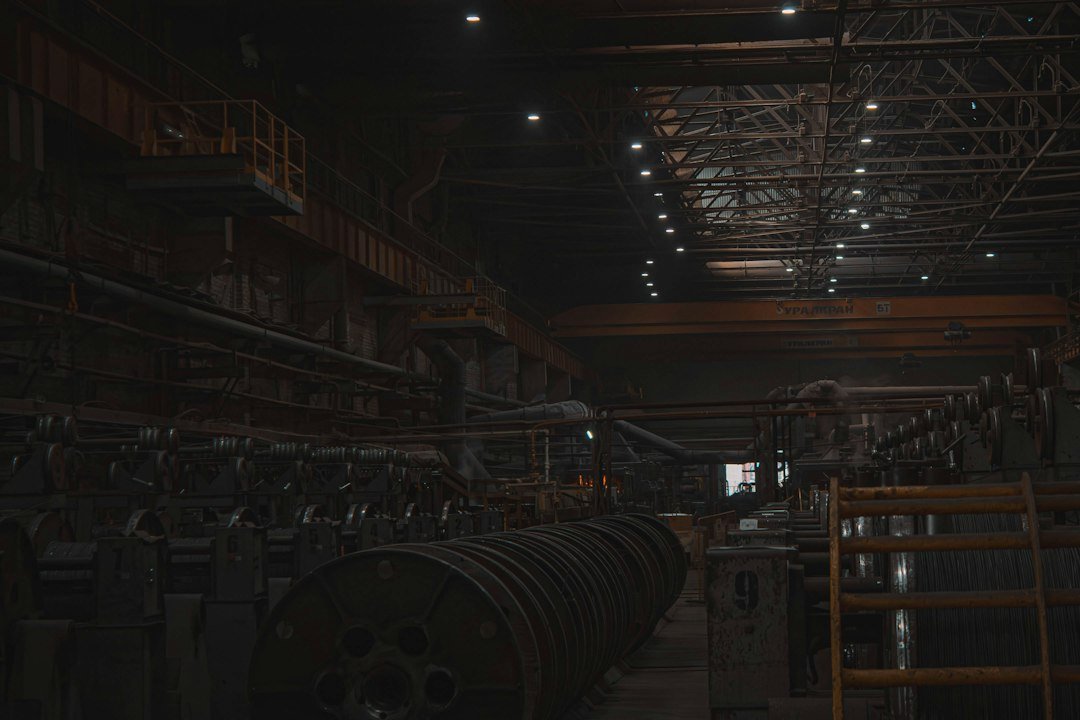
Mills give the lowest unit price and full control of chemistry, size and coating, because you are buying from a rolling schedule. The trade-off is order size and timing. Mills plan production by campaign, so a non-standard size waits for its slot, and many mills sell export volumes through their own trading arms or appointed agents rather than to every buyer who asks.
2. The authorised distributor
A distributor buys mill material in bulk and resells it in smaller lots with the original mill certificate. Ask for the authorisation letter from the mill and check that the mill name on the certificate matches. This is often the best route for mid-size project orders that need traceable material without full mill tonnage.
3. The stockist in a trading market
Stockists hold standard sizes in warehouses in markets such as Lecong in Foshan or the stainless trading area in Wuxi. They deliver fast and accept small orders, and you pay for that convenience. Their range is limited to what sells well, so custom thickness, coating or length usually means going back to a mill.
4. The trading or sourcing company
Traders buy from several of the above and combine materials into one order. The value is consolidation and convenience. The risk is that some traders present themselves as factories. Our guides on telling a factory from a trading company and reading a Chinese business licence show how to check before you pay. Traders are not a problem in themselves; hidden traders are.
How raw material prices work in China
Raw material prices in China move with market references, not catalogues. Steel rebar and hot-rolled coil, aluminium and copper all trade as futures on the Shanghai Futures Exchange (SHFE), and price agencies publish daily spot assessments for regional markets. Suppliers build their quotation on top of that base, which is why many hold a steel price for days rather than weeks.
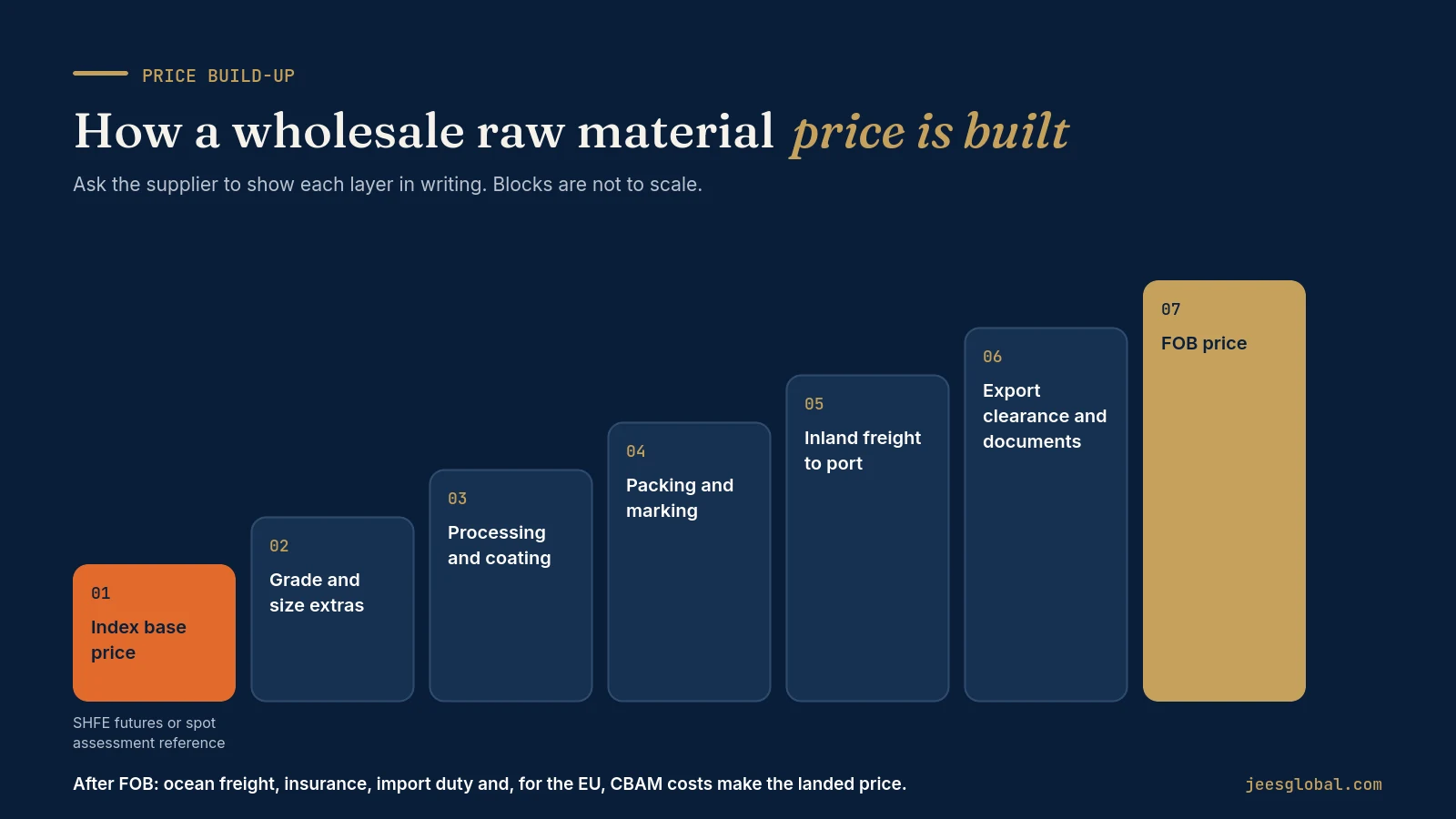
Ask every supplier to show the layers separately: base price and its reference date, extras for grade and size, processing such as cutting or coating, packing, inland freight and export costs. A single lump-sum price hides where the margin sits and makes it impossible to compare a mill with a stockist. For long contracts, agree a price formula tied to a named index instead of a fixed price that one side will try to renegotiate when the market moves.
Two details catch first-time buyers. First, steel can be invoiced by theoretical weight, calculated from nominal dimensions, or by actual weight on a weighbridge, and the two can differ. Name the basis in the contract. Second, compare offers on landed cost, not ex-works price. Our guides to China building material price breakdown and calculating landed cost walk through both, and China supplier payment terms covers deposit and balance structures.
2026 rules that change raw material buying from China
Time-sensitive: checked October 2026. Confirm current rules with your supplier and customs broker before you order.
- Steel export licences. From 1 January 2026, China manages exports of certain steel products through export licences, announced by the Ministry of Commerce and the General Administration of Customs. Exporters apply with the export contract and the manufacturer’s product quality inspection certificate (SMM report). In practice, buy from exporters who can obtain the licence, allow time for it in the schedule, and expect the mill certificate to be required paperwork, not an optional extra.
- No export tax rebate on aluminium and copper products. The Ministry of Finance and State Taxation Administration cancelled export tax rebates for aluminium and copper products from 1 December 2024 (Announcement No. 15 of 2024, summarised by China Briefing). Price lists from before that date are no longer a guide.
- EU CBAM. The definitive period of the EU Carbon Border Adjustment Mechanism started on 1 January 2026. EU importers of goods such as iron and steel, aluminium and cement above the 50-tonne annual threshold must be authorised CBAM declarants and pay for embedded emissions (European Commission). Ask the producer for emissions data before you order. Many traders cannot supply it.
- Duties at destination. Many markets apply anti-dumping duties, safeguards or quotas to Chinese steel and aluminium. Check your own tariff schedule before you quote a project price.
Certificates and checks that protect a raw material order
The mill test certificate is the core document. Ask for an EN 10204 type 3.1 certificate, which is issued by the manufacturer and validated by an inspection representative independent of the production department, rather than a type 2.2 test report. Then check that the heat or batch numbers on the certificate match the tags on the bundles and coils. A certificate that does not match the material proves nothing.
Independent checks before loading should cover:
- Dimensions and tolerance: diameter, thickness, width, length and straightness against the order.
- Mechanical and chemical tests: yield and tensile strength, elongation and bend tests for rebar, chemical composition for steel grades.
- Coating: zinc coating mass on galvanised coil, paint film on PPGI, anodising or powder thickness on aluminium.
- Grade verification: a handheld XRF (PMI) test confirms stainless grade on site. A known risk is a lower grade such as 201 supplied as 304.
- Marking and packing: tags, heat numbers, bundle counts and weights against the packing list.
For a first order with a new supplier, a factory audit and manufacturer verification come before the deposit. A pre-shipment inspection in China comes before the balance. See also our pre-shipment inspection guide for construction materials and product certification and compliance.
Shipping raw materials: container or break bulk
Steel reaches a container’s weight limit long before it fills the space, which is why 20ft containers are common for heavy steel and why weight per container should be planned with your forwarder, including road weight limits at the destination. Coils need saddles or cradles and lashing so they cannot roll. Large tonnages of rebar, coil or sections often move as break bulk on general cargo vessels when the destination port can handle them.
Protect bare steel from moisture during the sea voyage, and agree marking so each bundle can be traced to its certificate on arrival. Related guides: FCL vs LCL, export packaging, FOB, CIF or DDP and container loading supervision.
Paperwork checklist for a raw material order
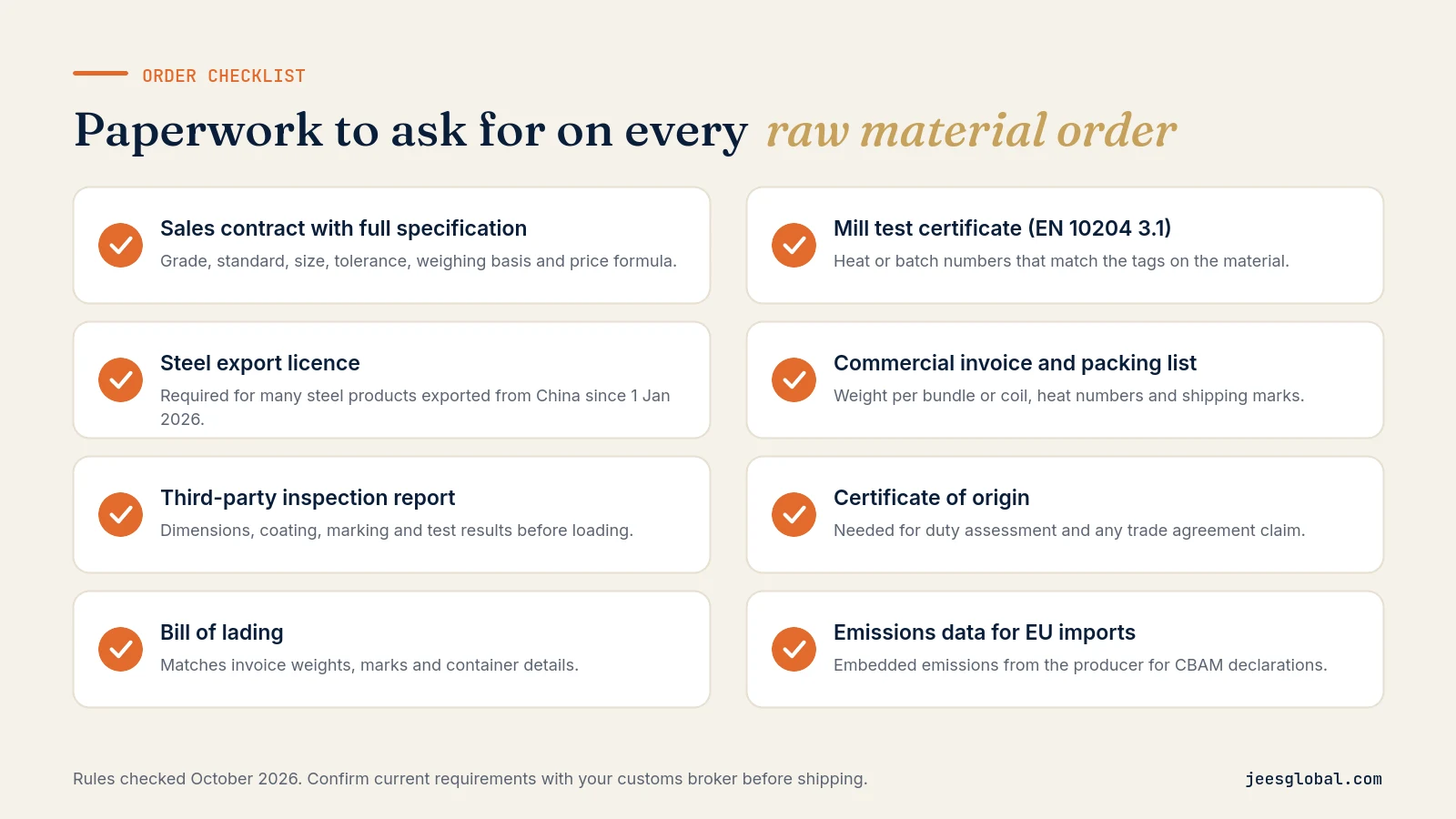
Ask for these before the balance payment: sales contract with full specification, mill test certificate, steel export licence where it applies, commercial invoice and packing list with heat numbers, inspection report, certificate of origin and bill of lading. EU buyers should add producer emissions data for CBAM. Our guide to export documents for building materials from China explains each one.
How to source wholesale raw materials from China, step by step
- Write the specification. Material, grade, standard, size, tolerance, coating, quantity per size, delivery port and required date.
- Choose the supplier type. Mill for large repeat tonnage, distributor for mid-size traceable lots, stockist for speed, trader for mixed lists.
- Shortlist and verify. Business licence, mill authorisation letter for distributors, export history and sample certificates. Our supplier verification checklist lists twelve checks.
- Request comparable quotations. Same specification to every supplier, with price basis, reference date, validity period, weight basis and Incoterm stated.
- Test before volume. For a new supplier, test a first lot or a sample from the actual heat before committing to full tonnage.
- Contract the details. Specification, tolerance, weighing method, price formula, certificate type, inspection rights, packing, Incoterm and payment terms.
- Inspect, then load. Third-party inspection before the balance, loading supervision, and documents checked against the material before the ship sails.
When a sourcing company makes sense, and when it does not
If you buy one product in full-mill tonnage on repeat, deal with the mill or its appointed exporter directly. A middle layer adds cost without adding much control.
A sourcing partner earns its fee when the order is mixed: raw materials alongside finished products, several suppliers, a project deadline, and no team on the ground to check certificates and material before loading. JEES Global works from Wuxi and coordinates supplier checks, certificate review, inspection, consolidation and shipping for construction projects. See what sourcing agent fees should include and one-stop vs multi-supplier sourcing before you decide.
Frequently asked questions
Can I buy raw materials from China in small quantities?
Yes, from stockists and trading companies that hold standard sizes. Mills usually need larger tonnage per size and specification. Expect a higher unit price for small lots and check that the material comes with its mill certificate. See MOQ for building materials from China.
How do I check that a Chinese raw material supplier is a real mill?
Check the business licence scope, ask for production equipment and capacity details, request a recent mill certificate under the company’s own name, and arrange a factory visit or audit. A distributor should show a written authorisation from the mill.
Is a steel price from China fixed once I receive the quotation?
Only for the validity period stated on the quotation, which is often short because base prices follow futures and spot markets. For contracts that run over several months, agree a price formula linked to a named index.
Which certificate should come with steel from China?
A mill test certificate, ideally EN 10204 type 3.1, showing chemical composition and mechanical properties with heat numbers that match the tags on the material. Since 2026, the manufacturer’s quality certificate also supports the exporter’s licence application for many steel products.
Do I need an export licence to buy steel from China?
The licence is the exporter’s responsibility, not the buyer’s. Your part is to sign a proper export contract and confirm that the supplier can obtain the licence for your products and allow for it in the schedule.
Is buying raw materials from China always cheaper?
Not always. Unit prices are often competitive, but freight, import duties, any anti-dumping measures and, in the EU, CBAM costs can close the gap. Compare landed cost at your site against local supply before you commit.
Related guides
- How to Source Building Materials from China: A Complete 2026 Guide
- Where Building Materials Are Actually Made in China: A Hub-by-Hub Guide
- What You Are Actually Paying For: China Building Material Price Breakdown
- Supplier Verification Checklist: 12 Things to Confirm Before You Pay
Send your material list
Send your raw material and finished material list with grades, quantities, delivery port and required date. Each line is matched to a suitable supplier type, quotations are compared on the same basis, and inspection and shipping are planned as one programme.