
Hotel and resort FF&E procurement from China differs from ordinary construction sourcing in one decisive way: consistency across a large repeated set matters more than the specification of any single item. Four hundred rooms have to look identical, arrive in a sequence the fit-out programme can absorb, and survive commercial use for years. Getting one bathroom right is easy. Getting four hundred identical is the job.
That constraint changes almost every sourcing decision — batch control, sample approval, packing, shipping sequence and inspection all work differently on an FF&E package than on a one-off build.
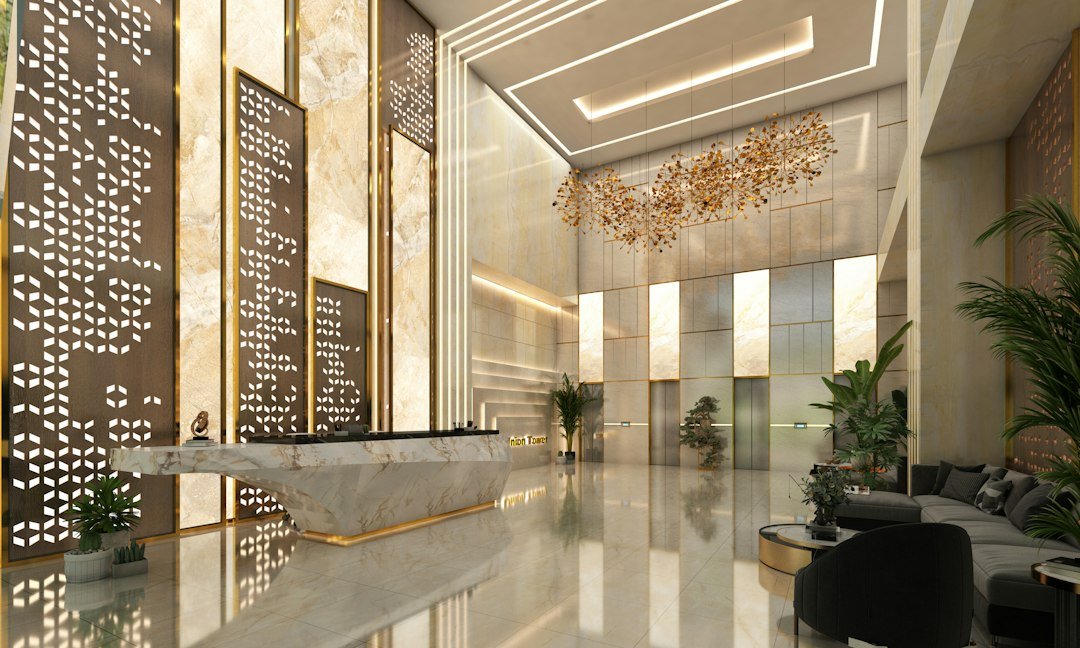
What sits inside a hotel FF&E and finishes package
| Area | Typical scope |
|---|---|
| Guest rooms | Casegoods, wardrobes, headboards, seating, desks, lighting, soft furnishings, mirrors, floor and wall finishes |
| Guest bathrooms | Sanitary ware, brassware, shower systems, vanities, mirrors, tiling, accessories |
| Corridors | Doors and frames, ironmongery, wall protection, lighting, floor finishes, signage |
| Public areas | Reception joinery, stone, feature lighting, loose furniture, decorative elements |
| F&B | Seating, tables, bar joinery, lighting, floor and wall finishes |
| Back of house | Doors, hardware, robust flooring, utilitarian fittings |
Guest rooms dominate by volume and by risk, because everything in them is repeated hundreds of times. A minor defect rate that would be trivial on a single house becomes a significant number of unusable rooms at hotel scale.
Batch consistency is the whole problem
The single most common failure on a hotel package is visible variation between production batches. Tiles from two firings, timber veneer from two logs, fabric from two dye lots, powder-coated metalwork from two runs — each pair may be individually within tolerance and still obviously different when installed on adjacent floors.
Four controls address it:
- Order the whole quantity in one batch wherever the product allows, even if delivery is staged. This is more important than almost any price consideration.
- Specify batch or dye-lot control in writing, and require the batch reference on the packing list and carton markings.
- Approve tolerance ranges, not single samples, for natural materials — two samples showing the acceptable extremes.
- Inspect against the retained golden sample at every production run, not only the first.
Where a package must be produced in stages, ask the factory to retain reference material from the first run and produce subsequent runs against it — and build the check into the inspection scope.
Related: Getting samples from Chinese factories before you commit to production · MOQ for building materials from China
The mock-up room
Most hotel projects build a mock-up room before full production, and on an imported package it is essential rather than optional. It is the only point at which the whole specification is seen assembled rather than as separate samples.
A mock-up reveals what individual samples cannot: whether the tile grout colour works against the sanitary ware, whether the veneer and the flooring clash, whether the lighting temperature flatters or ruins the finishes, whether the hardware operates comfortably in situ.
Build the mock-up into the programme properly. It sits after sample approval and before bulk production, and it needs enough time for changes to be made and re-approved without compressing the production window.
Sequencing deliveries to the fit-out programme
A hotel fit-out runs floor by floor, and material arriving in the wrong order is material occupying storage that the site does not have. Two practical consequences:
Split the shipment by phase, not by supplier. The container for floors one to five should contain everything needed for floors one to five, across every category — not all the tiles for the whole building in one container and all the sanitary ware in another.
Load in reverse sequence. Items needed first come out first. On a hotel package this turns a container from a puzzle into a delivery.
Both require consolidation across suppliers organised around the programme rather than around whichever factory finishes first.
Related: Container loading supervision · One-stop vs multi-supplier sourcing
Attic stock
Order spares of everything that will be damaged in service: tiles, fabric, veneer panels, hardware, light fittings, decorative elements.
This costs little at the time of the original production run and a great deal afterwards, when replacing a broken lobby tile means either a new minimum order from the factory with a colour that will not match, or a visible repair. Agree the attic stock percentage with the operator and the designer at specification stage, and order it inside the main batch.
Commercial-grade durability
Residential specification does not survive hotel use. Where products are being sourced to a designer’s visual intent, the durability criteria have to be written in explicitly, because a factory quoting to a visual reference will quote the cheapest construction that achieves the look.
Specify, per category: abrasion and wear ratings on flooring, fabric rub counts on upholstery, cycle testing on hardware and hinges, corrosion resistance on brassware and bathroom fittings, and fire performance where the destination requires it.
Fire compliance in particular is not optional in hospitality and varies by jurisdiction. Establish the requirement with the project’s consultants before enquiries go out — retrofitting a compliant product after production is rarely possible.
Related: Product certification and compliance when importing from China · How to write a material list or BOQ that Chinese factories can actually quote
Inspection at hotel scale
Sampling-based inspection behaves differently when a defect repeats across hundreds of identical units. A defect rate that looks acceptable as a percentage translates into a specific number of rooms that cannot be handed over.
Work in units the project understands — rooms affected, not percentage defective — and inspect across the whole production run rather than only at the start, because batch drift is the characteristic failure on long runs.
Where the package ships in phases, each phase needs its own inspection against the same retained golden sample. The second container is where consistency fails, not the first.
Related: Pre-shipment inspection for construction materials · Quality control checklist for importing tiles, sanitary ware and doors
Coordinating an FF&E package across factories
No single Chinese factory produces a hotel package. Casegoods, sanitary ware, brassware, lighting, flooring, doors, hardware and soft furnishings come from different industries in different provinces, and they all have to arrive coordinated in appearance, in sequence and in time.
That coordination is the work: one specification standard applied across every supplier, batch control specified and verified per category, samples collected and reviewed as a single palette rather than one courier at a time, and containers consolidated around the fit-out programme.
JEES Global handles this from a Wuxi base with sourcing across Foshan, Guangzhou, Zhongshan and the other relevant manufacturing hubs, covering the categories a hospitality package needs — sanitary ware, tiles and flooring, doors, wardrobes and joinery, lighting and soft furnishings and wall panels — across all 19 material categories, from BOQ and schedule review through inspection to phased consolidated shipment.
Frequently asked questions
What does FF&E mean?
Furniture, fixtures and equipment — the loose and fixed items that furnish a hotel, as distinct from the building structure and the MEP installation. In practice hotel packages usually also cover finishes such as tiling, flooring and joinery.
Can a whole hotel package be sourced from China?
The great majority of categories can, but not from one factory. It requires coordination across several manufacturers in different industries and provinces, which is why hotel packages are typically handled through a sourcing partner rather than direct.
How do I stop rooms looking different from each other?
Order the full quantity in one production batch wherever possible, specify batch and dye-lot control in writing, require batch references on packing lists, and inspect every production run against the same retained golden sample.
Should I build a mock-up room?
Yes. It is the only point at which the full specification is seen assembled rather than as separate samples, and it is far cheaper to change a mock-up than a completed floor.
How much attic stock should I order?
Agree the percentage with the operator and designer at specification stage and order it inside the main production batch. Replacing items later from a new batch will not match.
Send your FF&E schedule
Send the room specification, finishes schedule or FF&E list with the project location and fit-out programme. You will get verified factory options per category, a consolidated quotation, and a phased shipping plan built around the fit-out sequence.